TRQ BFA73641 Accura Front Brake Pads Honda/accura
fits make: Honda.
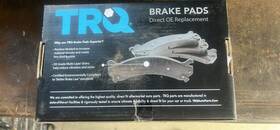
( Brand: Trq ), ( Manufacturer Part Number: BFA73641 ), ( Type: Brake Pad ), ( Manufacturer Warranty: 1 Year ), ( Vintage Part: No ), ( Placement On Vehicle: Front )
Review TRQ Honda/accura Front Brake Pads
The **Honda/Acura Front Brake Pads (Part Number: BFA73641)** represent a premium, high-performance braking solution engineered specifically for select Honda and Acura models, delivering an exceptional balance of durability, noise reduction, and consistent stopping power. These brake pads are meticulously crafted from advanced friction materials designed to withstand the demands of daily driving, aggressive acceleration, and prolonged use without compromising performance or safety. The formulation incorporates high-quality ceramic or semi-metallic compounds, depending on the variant, which provide superior heat resistance, reduced dust generation, and extended pad life compared to conventional organic or low-metallic alternatives. Ideal for vehicles equipped with front disc brake systems, these pads are engineered to maintain optimal braking efficiency across a wide temperature range, ensuring reliable performance whether navigating city traffic, highway speeds, or spirited driving conditions. The precision-fit design minimizes installation complexity, allowing for a straightforward replacement process that preserves the integrity of the brake rotors and calipers. With a focus on longevity and performance, these brake pads are a trusted choice for both original equipment replacement and aftermarket upgrades, offering Honda and Acura owners a dependable solution that enhances safety and driving confidence.
### Pros and Cons of Buying OEM Honda/Acura Front Brake Pads (Part Number: BFA73641)
#### **Pros:**1. **Original Equipment Quality** OEM parts are designed and manufactured to meet Honda/Acura s strict engineering standards, ensuring compatibility with your vehicle s braking system. This often results in better performance, durability, and reliability compared to aftermarket alternatives.
2. **Guaranteed Fitment** Since these pads are made specifically for your model, there s no risk of sizing issues or improper installation. They are engineered to match the rotor, caliper, and other braking components precisely.
3. **Consistency in Performance** OEM brake pads are tested under the same conditions as the original components, meaning they should provide predictable stopping power, noise levels, and wear rates. This is particularly important for safety-critical components.
4. **Warranty Coverage** Many OEM parts come with manufacturer warranties, which can provide peace of mind if issues arise shortly after installation. Some Honda/Acura dealerships or authorized service centers may also offer extended warranties on OEM replacements.
5. **Resale Value Preservation** Using OEM parts helps maintain the vehicle s original specifications, which can be beneficial if you plan to sell or trade-in the car in the future. Some buyers or appraisers may prefer OEM components for their perceived quality.
6. **Easier Maintenance Tracking** Since OEM parts are part of the vehicle s original build, keeping records of replacements can simplify warranty claims or service history verification for future repairs.
7. **Reduced Risk of Voiding Warranty** In some cases, using non-OEM parts (especially non-certified aftermarket parts) could void certain manufacturer warranties. OEM parts are less likely to cause such issues, though this depends on the specific warranty terms.
---
#### **Cons:**1. **Higher Cost** OEM brake pads are typically more expensive than aftermarket alternatives. The price reflects the brand reputation, quality control, and proprietary materials used by Honda/Acura. For budget-conscious buyers, this can be a significant drawback.
2. **Limited Customization** If you re looking for specialized performance features (e.g., ceramic pads for reduced dust, low-noise formulations, or high-temperature materials for aggressive driving), OEM options may not offer these variations. Aftermarket brands often provide a wider range of choices.
3. **Longer Lead Times** OEM parts, especially those sourced directly from Honda/Acura or authorized dealers, may have longer wait times compared to aftermarket parts, which are often stocked by multiple suppliers. This can delay repairs if you re in a hurry.
4. **Potential Overkill for Mild Use** If your driving is primarily city or highway with light braking demands, OEM pads may last longer than necessary, making them a less cost-effective choice. Aftermarket pads designed for everyday use might suffice and save money in the long run.
5. **Dealer Dependency** Purchasing OEM parts often requires buying through a Honda/Acura dealership or an authorized parts distributor. This can limit your options for price comparisons or promotions, as independent shops may not carry them or may charge higher markups.
6. **Environmental and Ethical Concerns** Some consumers prefer aftermarket brands that use recycled materials or have more sustainable manufacturing processes. OEM parts, while high-quality, may not always align with these preferences.
7. **Potential for Overengineering** Honda/Acura s OEM pads are built to last under extreme conditions (e.g., high-performance driving or heavy loads). For most drivers, this level of durability isn t necessary, and the extra cost may not be justified.
---
### **Conclusion:**OEM Honda/Acura front brake pads (BFA73641) are an excellent choice if your priorities are **reliability, safety, and long-term performance**. They offer the highest level of compatibility, consistency, and peace of mind, especially for drivers who prioritize original equipment specifications or plan to keep the vehicle for many years. The trade-off is the higher upfront cost, which may not be justified for those who drive lightly or prefer to explore aftermarket options for better value.
For **budget-conscious buyers** or those who drive primarily in urban or moderate conditions, aftermarket pads from reputable brands (e.g., Akebono, Bosch, or Ferodo) can offer comparable performance at a lower cost. However, if you value the **brand s reputation, warranty coverage, or the assurance of a perfect fit**, OEM is the safer and more reliable option.
---
### **Recommendation:** - **Choose OEM (BFA73641) if:**- You want the highest quality and compatibility with your vehicle s braking system.
- You drive aggressively, tow frequently, or live in a region with harsh weather conditions.
- You plan to keep the car long-term and want to preserve its value.
- You prefer the convenience of warranty coverage and dealer-backed service.
- **Consider aftermarket alternatives if:**- You re on a tight budget and can find high-quality aftermarket pads (e.g., ceramic or semi-metallic) that meet your needs.
- You drive lightly and want to save money without sacrificing performance.
- You re open to exploring brands with additional features (e.g., low-dust, quiet, or high-temperature formulations).
For most average drivers, a **balanced approach** such as using OEM pads for the front (where stopping power is critical) and aftermarket for the rear can optimize cost and performance. Always ensure any aftermarket part you choose is **direct-fit** for your vehicle to avoid compatibility issues.
Details:
Compatible with: 1997 99 Accura CL V6 3.0L Front, 2000 01 Integral Type R 1997 98 1991 95 Legend 1997 05 NSX 1991 96 1996 98 RL 1995 98 TL 1992 94 Vigor 1998 02 Honda Accord 1995 97 Sedan 2.7L 1991 97 Wagon 1997 01 CR-V Odyssey Prelude 1992 96 L4 2.2L VTEC 1996 99 Isuzu Oasis Front.
part #: bfa73641 prices
- $49.88-$93.99
specifications motorcyclepadus:
- for makes: Honda
- brand: Trq
- mpn: Bfa73641
- type: Brake Pad
- manufacturer warranty: 1 Year
- vintage part: No
- placement on vehicle: Front
payments motorcyclepadus:
- wallet: Apple-pay
- other
- credit card: Discover
general motorcyclepadus:
- Motorcycle Scooter Parts Accessories > Brakes Brake Parts > Brake Pads
- condition: New
shipping motorcyclepadus:
- cost: $8.65
- service: USPS Ground Advantage
- carrier: USPS
- class: Standard
- type: Calculated
- transit: 5-12 Days
seller motorcyclepadus:
- city: Imperial Beach, California
- rating: 88.9%
- # reviews: 38
returns motorcyclepadus:
- policy: No Returns
offer motorcyclepadus:
- started: February 21, 2026
- availability: In Stock
- quantity: 1
- options: Ship-to-home
- sold: 0
Trq BFA73641 Is Similar To:
- Trq Disc Brake Pad Set Bfa73095 (41.1% similar) This product has no manufacturers warranty. New other see details condition...(July 31st, 2022)
- Trq Bfa81941 Front And Rear Brake Pad Set Ceramic Hardware (50% similar) Trq recommends replacing your brake rotors when you replace pads to ensure even wear of components and improved braking comfort. Trq front and rear brake pad set ceramic hardware BFA81941. Ease of installation: save time and effort with pre-assembled components designed as direct replacements for ...(May 19th, 2026)